Parkdale Level Crossing Removal 

Parkdale Level Crossing Removal
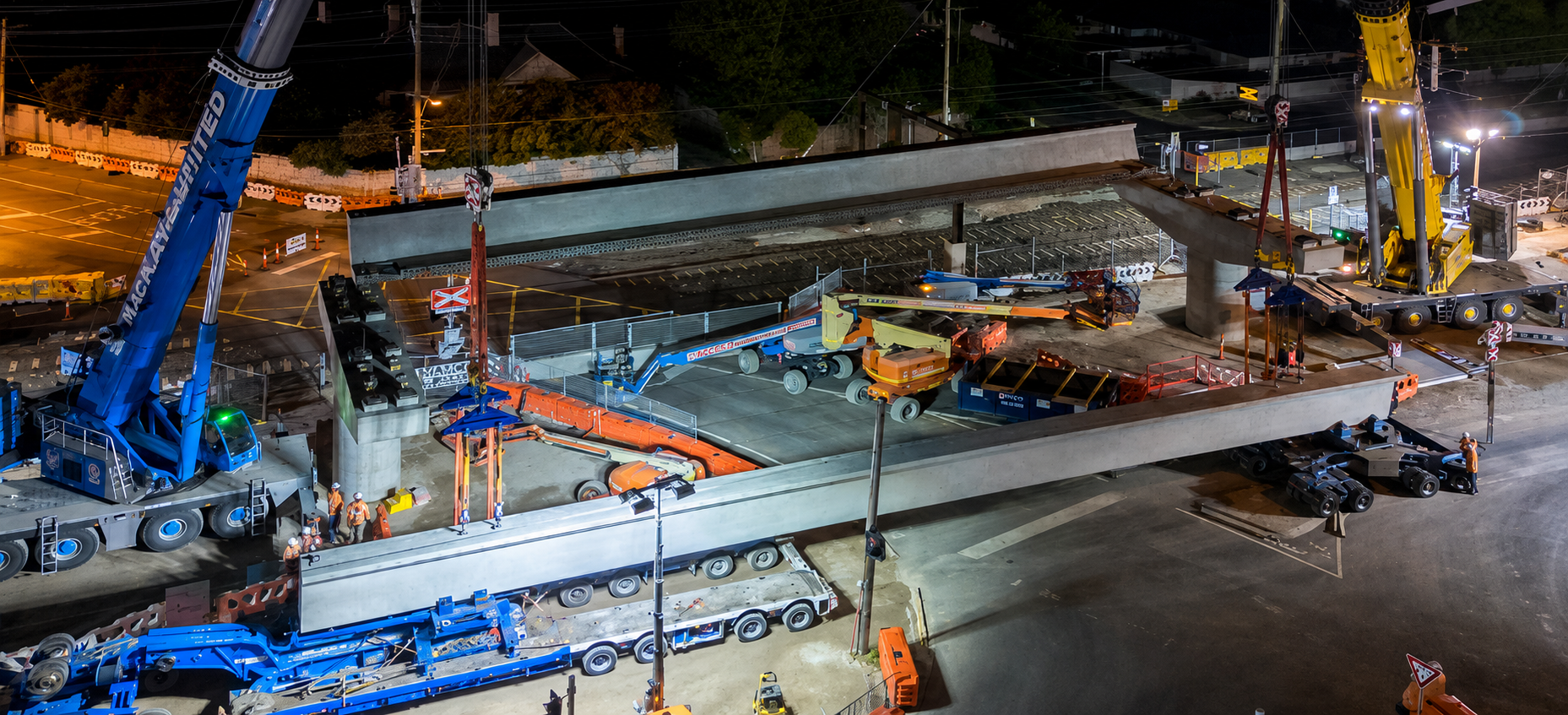
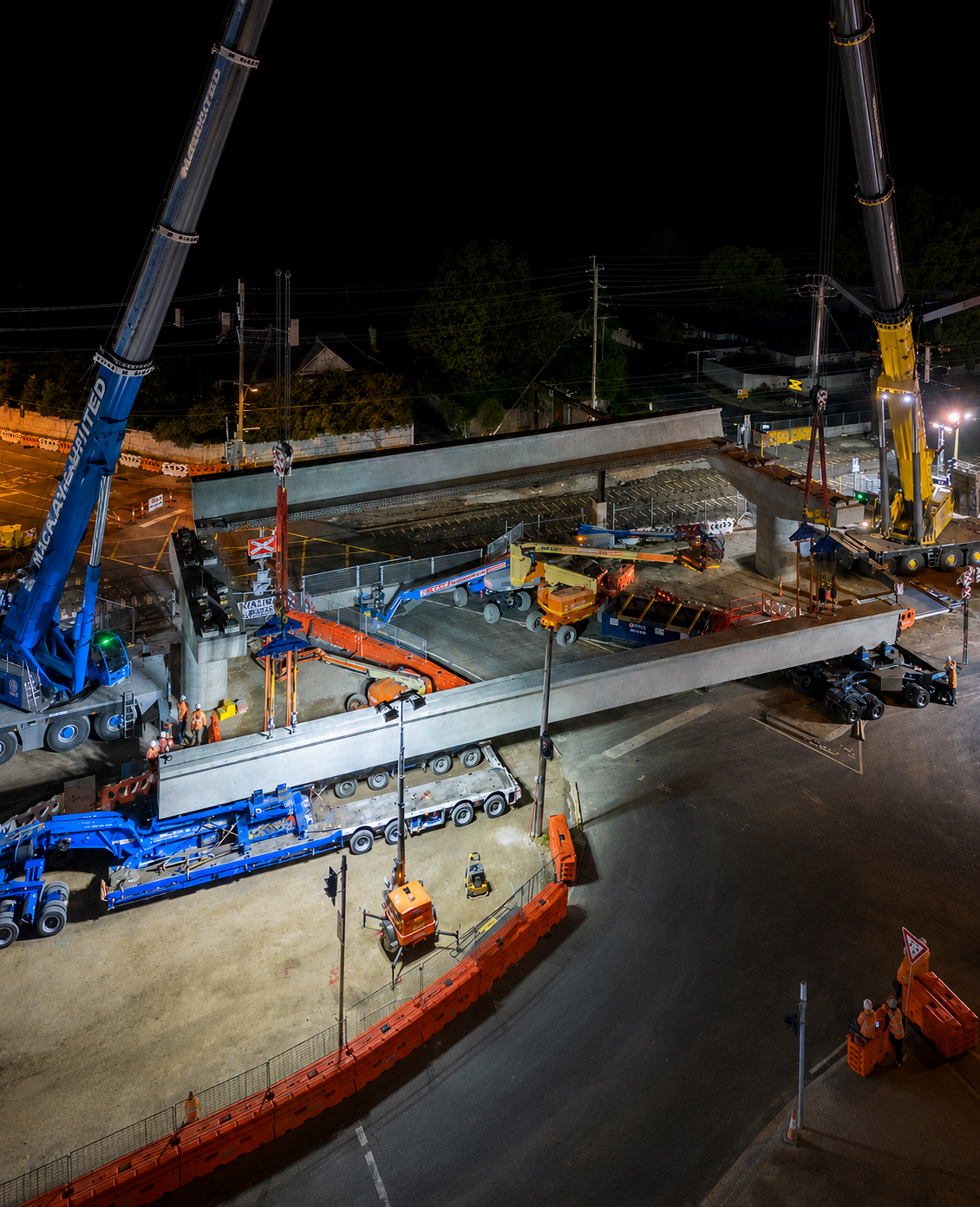
McKay United Crane Hire played a critical role in the delivery of the Parkdale Level Crossing Removal Project, providing heavy lifting solutions and specialist crane engineering throughout construction of the new elevated rail infrastructure. 


Rail services and the new station opened in August 2024, with final project works completed during 2025.

The project removed two dangerous level crossings by raising the Frankston Line onto a 1.1-kilometre elevated rail bridge while delivering the new Parkdale Station. The structure incorporated 152 L-shaped precast bridge beams, each measuring between 25 and 31 metres in length and weighing up to 120 tonnes.

Sector

Rail

Client

TO BE CONFIRMED

Location

Princes River, Victoria, Australia

Completion

June 2025

Scope

McKay United was responsible for planning and executing the heavy lifting operations required for installation of the elevated rail structure. The scope included:

Engineering and planning of all critical heavy lifts. Dual crane lifting operations for installation of 120-tonne precast bridge beams. Transport coordination for oversized beam deliveries. Crane mobilisation and setup Rigging and lifting supervision Night-time installation works during scheduled rail occupations. To complete the project, McKay United deployed: Grove GMK7450 (450-tonne all-terrain crane). Grove GMK6400 (400-tonne all-terrain crane). Franna crane and additional support equipment for rigging and logistics. Oversized bridge beams were transported from Laverton North and installed during carefully coordinated night possessions.

Engineering

Every major lift was supported by detailed engineering and lift planning to ensure safety, efficiency and accuracy.

McKay United developed engineered lift methodologies that considered: Ground bearing pressures, Crane configurations, Lift radii, Dual crane load sharing, Rigging design, Transport sequencing, Site access, Weather contingencies, Rail possession timeframes. The dual crane lifting methodology significantly improved beam stability during installation while reducing rigging complexity and increasing placement accuracy.

Outcome and Results

McKay United successfully completed the heavy lifting package, installing critical bridge components safely and efficiently within the project's strict construction program.

Through meticulous planning and experienced crane operations, all major beam installations were completed within scheduled rail possessions while maintaining safety and operational performance. The successful execution of these lifts contributed to the delivery of the elevated rail bridge and new Parkdale Station, improving safety and reducing traffic congestion for the local community.

Conclusion

The Parkdale Level Crossing Removal Project demonstrated McKay United's capability to deliver complex heavy lifting solutions within highly constrained rail infrastructure environments.

Combining detailed engineering, experienced personnel and specialised crane equipment enabled the safe installation of some of Victoria's largest precast bridge components while meeting demanding project deadlines.

Challenges

Delivering heavy lifting operations within an active metropolitan rail corridor presented several significant engineering and logistical challenges.

Tight Rail Possession Windows

All critical lifts were completed within scheduled rail shutdowns, leaving virtually no tolerance for delays.

Every aspect of the operation—including crane mobilisation, transport arrivals, rigging sequences and contingency planning—was carefully coordinated to ensure works remained on schedule and rail services could resume as planned.

Heavy and Long Bridge Beams

Each precast beam weighed up to 120 tonnes and measured between 25 and 31 metres long.

Their size introduced additional engineering considerations including:

  • Deflection control
  • Rigging geometry
  • Load stability
  • Swing control
  • Precision placement onto bridge bearings

McKay United engineered a dual crane lifting methodology that provided greater control throughout the lift while eliminating the need for large spreader beam systems.

Complex Dual Crane Lifts

Every bridge beam installation required two cranes operating in complete synchronisation.

This required:

  • Detailed load share calculations
  • Synchronous hoisting, luffing and slewing
  • Single lift director communication protocols
  • Reduced operating capacities to accommodate dynamic loading
Urban Environment

Operations were undertaken adjacent to Warrigal Road and Parkers Road within a busy suburban environment.

This required:

  • Traffic management plans
  • Pedestrian exclusion zones
  • Controlled crane positioning
  • Careful management of counterweight swing and outrigger locations
Restricted Site Conditions

Working within a constrained construction site required careful planning of:

  • High outrigger bearing pressures
  • Crane hardstands
  • Multi-axle crane access
  • Counterweight delivery logistics
  • Safe operating clearances
Rail and Overhead Services

As construction progressed, lifting operations occurred alongside newly installed rail infrastructure and overhead systems.

Planning included:

    • Electrical isolation where required
    • Height and clearance management
    • Sequencing of crane operations to avoid conflicts with overhead structures

Execution highlights

Lift accuracy

Precision placement of beams onto bridge bearings. Controlled dual crane lifting for improved load stability. Engineered rigging systems to minimise beam movement during installation. Accurate positioning achieved despite restricted working environments.

Weight

Lifted precast bridge beams weighing up to 120 tonnes. Managed installation of 152 large bridge beams. Utilised 450-tonne and 400-tonne all-terrain cranes for critical lifts. Engineered heavy lifting solutions for long-span bridge construction.

Efficiency

Completed major lifts within tightly controlled rail possession windows. Successfully coordinated crane operations with oversized beam deliveries. Reduced installation time through engineered dual crane lifting methodology. Maintained construction program milestones without disruption to rail operations.

Environmental

Night-time construction minimised disruption to surrounding communities. Coordinated traffic management reduced impacts on local road networks. Efficient crane operations reduced overall site activity and construction duration. Supported delivery of infrastructure that permanently removed two level crossings, improving long-term transport efficiency and reducing congestion.